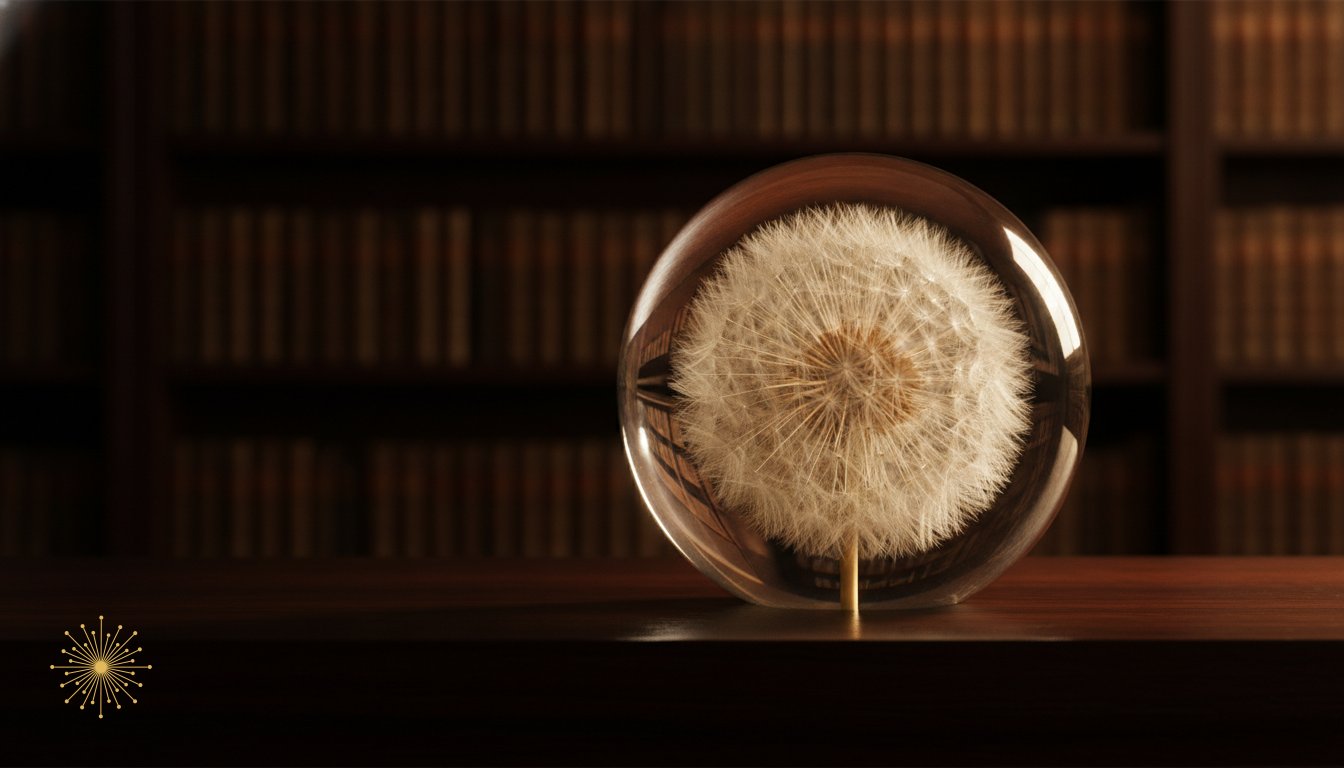
A Breath Held in Time: Selecting a Meaningful Art Object for Your Bookshelf
What if your library was not merely a storage for paper, but a sanctuary for the soul? Too often, our shelves become crowded with the noise of the mundane. Meaningless objects. Forgotten fragments. They whisper of clutter rather than clarity. You seek an art object for bookshelf placement that does more than fill a void. You desire a presence that commands silence. A piece that invites the eye to rest. A moment for the mind to wander. It's a search for stillness. A pause in a world that refuses to slow down.
We understand the difficulty of balancing the weight of literature with the lightness of form. It's about finding that rare intersection of high-end botanical art and emotional resonance. This reflection explores how to transform your workspace into a gallery of quiet wonder. We'll guide you in selecting a botanical sculpture that captures nature’s fleeting poetry. A moment suspended in time. A breath held forever amongst your favourite volumes. Discover the alchemy of curation. The beauty of a memory made tangible. This is the art of holding onto the ephemeral.
Key Takeaways
Reframe the library as a curated sanctuary where every piece evokes a sense of stillness and nature’s quiet poetry.
Understand the importance of crystal-clear clarity in a botanical sculpture to capture light and illuminate the depths of your shelves.
Select a meaningful art object for bookshelf curation by prioritising authentic specimens that offer a tangible connection to the natural world.
Master the arrangement of stillness by utilising white space to allow your most cherished volumes and objects room to breathe.
Discover how the Taraxacum Orbis acts as a meditative focal point, preserving a fleeting moment of beauty for a lifetime of reflection.
Table of Contents
The Bookshelf as a Landscape for Suspended Time
Choosing a Botanical Orb for Light and Clarity
Beyond the Ephemeral: The Collector’s Piece as a Memory
Arranging Stillness: A Guide to Minimalist Curation
Taraxacum Orbis: A Fleeting Moment Suspended
The Bookshelf as a Landscape for Suspended Time
A bookshelf is not a storage unit. It's a landscape. A quiet geography of the self. We often treat shelves as functional structures. Mere wood and varnish. But they are sanctuaries. Spaces for suspended time. Every volume speaks. Every spine carries a voice. Yet, the eye needs a place to rest. An art object for bookshelf placement offers this respite. It's the punctuation in a long sentence. A silent comma. A moment to breathe before the next chapter begins. It's a theatre of the mind.
Arranging these shelves is a form of the art of still life. It's the intentional placement of the inanimate to evoke the eternal. We seek objects that tell a story of the earth. Not just another item. We want a nature’s art object that breathes. It provides a necessary pause amongst the dense text of our lives. It's about curating stillness. In a home filled with the hum of life, we need an anchor. A focal point that doesn't demand attention, but gently invites it.
The Poetry of the Everyday
We move through our days in a rush. We collect. We possess. But do we truly observe? There's a profound shift when we move from "having" to "observing" within our interior spaces. We begin to see the poetry of the everyday. The way morning light hits a glass surface. The delicate, weightless structure of a seed head. Choosing a collector’s piece is an act of mindfulness. It reminds us that the world is fragile. It suggests that time is not just a sequence of tasks, but a collection of small wonders. It's finding beauty in the fleeting. A wish. Captured in light.
A Dialogue Between Nature and Space
Books are structured. They have rigid lines. Sharp corners. Hard spines. They represent human knowledge. Logic. Order. A botanical sculpture offers a different dialogue. It introduces organic forms. Soft curves. The intricate, mathematical chaos of the natural world. This interplay softens the environment. It creates a balance. A harmony between the written word and the wild world. Finding the right art object for bookshelf displays is about more than aesthetics; it's about soul. The sphere doesn't fight against the books. It complements them. It offers a visual exhale. Whilst the books contain the history of thought, the botanical orb contains the history of a single summer afternoon. For more on this harmony, explore The Botanical Interior Accent. It's a conversation between nature and space.
Choosing a Botanical Orb for Light and Clarity
The sun moves across the room. A slow, silent dance. It touches the spines of old books. It lingers on the grain of the wood. Then, it finds the sphere. In that moment, the room changes. Clarity is not merely a technical detail. It's the soul of a nature’s art object. Without it, the story is lost. The seeds become a blur. The memory fades into a fog. To choose an art object for bookshelf placement is to choose a window. A crystal-clear view into a world that usually lasts but a day.
A botanical sculpture must do more than sit. It must act. It must breathe. On a dark shelf, amongst the heavy shadows of literature, light is a rare guest. The spherical form is a lens. It gathers the stray beams. It focuses the dimmest glow. It illuminates the forgotten corner. It's an invitation. A whisper to come closer. To look deeper. It's the difference between an item that blends into the background and a piece that commands a moment of your time.
The Alchemy of Light Filtration
Light is the silent partner of the Taraxacum Orbis. When natural light passes through the sphere, the effect is hypnotic. Each tiny seed head becomes a filament. A glowing thread. The seeds don't just exist; they perform. Position your collector’s piece where the morning sun can find it. Or where the evening glow can wash over the seeds. You'll see the geometry of nature in high definition. It's a quiet spectacle. A private viewing of a summer field, held within your hands. It's light, filtered through history.
Botanical Geometry in Minimalist Design
The dandelion is a masterpiece of natural engineering. It's a perfect radial symmetry. A delicate explosion of form. On a shelf, the contrast is striking. The rigid, rectangular lines of the books provide a frame. The sphere provides the focus. This interplay between the structured and the organic is the heart of a hushed aesthetic. It doesn't scream for attention. It simply exists in its perfect, simple shape. It's a dialogue between the works of man and the works of the earth. To find your own focal point, you might explore our collection of botanical spheres. Each one is a study in stillness. A perfect circle. A captured wish. A silence that speaks of the changing seasons.
Beyond the Ephemeral: The Collector’s Piece as a Memory
A shelf often becomes a graveyard for the temporary. Small trinkets. Mass-produced items. They fill space but offer no weight to the soul. We must recognise the difference between these fleeting items and a truly meaningful art object for bookshelf display. One is merely there. The other is a presence. Authenticity is the bridge between the two. A nature’s art object must be rooted in the real. It must feature a specimen that once lived, once grew, and once surrendered to the cycle of the seasons. This reality is what creates emotional resonance.
Consider the dandelion. It's the flower of childhood. A symbol of pure, unadulterated hope. We remember the fields. The golden sun. The deep inhale before the wish. Then, the exhale. The seeds vanished into the blue. To own a botanical sculpture is to reclaim that lost breath. It's a way to hold the intangible. As a gift, it's far superior to common tokens. It doesn't just say "I remembered you." It says "I wish for your moments to stay." It's a memory made tangible. A piece of the earth, suspended in clarity.
Nature’s Art Object Held Forever
The meadow is a place of constant change. Flowers bloom and fade in a matter of days. A collector’s piece halts this progression. It's the transition from a fleeting meadow flower to a permanent sculpture. It's the "wish" as a tangible memory on your shelf. You aren't just looking at a plant. You're looking at a specific second in time that refused to pass. For those seeking to deepen their library, explore The Botanical Art Collector Piece. It's an exploration of curating eternal stillness amongst your favourite books.
The Artisan’s Touch in Taraxacum Orbis
The preservation of such a fragile state requires more than skill. It requires reverence. A hushed patience. Each Taraxacum Orbis is a testament to the slow way of doing things. We don't rush the natural world. We wait for it. We capture the single second when the seed head is at its most perfect. This is the value of an art object for bookshelf curation; it grows in emotional depth as the years pass. It doesn't age. It simply remains. A silent, beautiful anchor in a world of constant motion. It's a story that never ends.
Arranging Stillness: A Guide to Minimalist Curation
A shelf is a living composition. It's not about what you add. It's about what you allow to remain. We often fear the void. We fill every gap with the noise of the mundane. But white space is the very breath of a thoughtful library. It allows the eye to rest. It gives the mind permission to pause. When choosing an art object for bookshelf placement, consider the silence it creates. A single nature’s art object can hold a shelf better than a dozen trinkets. It becomes the anchor. The still point. The quiet centre of a turning world.
Balance is found in the rule of three. The heavy weight of books. The delicate form of the botanical orb. The invisible presence of negative space. This trio creates a rhythm that feels natural to the observer. Group your objects not by their size, but by the resonance they hold. Does this piece speak to that volume? Do they share a memory of a place or a season? Curation is an act of storytelling. It's the physical manifestation of your inner landscape. It's a dialogue between your history and your home.
Steps to a Serene Shelf Arrangement
Creating a sanctuary requires a deliberate hand. It's a slow process of refinement and honesty. Selecting the right art object for bookshelf curation is only the beginning; how you place it defines the atmosphere of the room.
Begin with the edit. Remove everything that does not spark a memory or a sense of beauty. If it's just filler, let it go.
Place your largest botanical sculpture at eye level. This is where the gaze naturally falls. It should be the first thing that greets you.
Leave breath between the objects. A moment of white space is as vital as the object itself. It's the silence that makes the music.
The Zen of the Workspace
The workspace is often a site of friction. Deadlines. Digital noise. Tangled thoughts. A botanical sculpture acts as a companion for deep thought. It's a focal point for focus. A reminder of the slow, patient cycles of the earth. In the heat of a busy afternoon, the Taraxacum Orbis remains cool. Still. Unmoved. It encourages a mindful breath every time the eye catches the orb. It's a piece of the meadow, brought to your desk. A captured wish that refuses to be hurried.
Every glance is an opportunity to reconnect with the ephemeral. To find your own meditative anchor amongst your books, you may view our collection of nature’s art objects. Each one is a study in stillness. A moment of perfection. A breath held in time. It's a way to bring the outside in, whilst keeping the chaos out. It's the art of living well.
Taraxacum Orbis: A Fleeting Moment Suspended
The search for the perfect art object for bookshelf curation ends in a single, silent sphere. It's the Taraxacum Orbis. A name that carries the weight of history and the lightness of a seed. This is the ultimate choice for those who seek more than just an item. It's the alchemy of stillness. A process where the brief becomes the eternal. We often think of beauty as something to be chased. But here, beauty has been invited to stay. It's a captured second. A silence that resonates amongst your favourite books. It's a quiet revolution against the rush of the modern world. A way to anchor your library in the timeless.
There is a profound grace in the preserved dandelion. It's a plant that usually surrenders to the first breeze. It's the very definition of the ephemeral. By holding it within a crystal-clear sphere, we aren't just saving a flower. We're saving a feeling. The beauty of the brief is that it reminds us to pay attention. When that briefness is given permanence, it becomes a teacher. It tells us that stillness is possible. Even in a busy household. Even in a crowded life. It's the poetry of nature, held forever in your hands.
A Memory Made Tangible
The dandelion is a vessel for our earliest hopes. We remember the feeling of the stem in our hands. The deep breath. The wish. It was a moment of pure possibility. This botanical sculpture preserves that specific feeling. It resonates with the collector’s soul because it represents a defiance of time. It's a wish that didn't disappear. It's hope, held in clarity. It's a memory made tangible. For those who wish to wander deeper into these reflections, we invite you to explore the Dandelion Sphere Journal. It's a place for stories of nature and the passage of time. A space for the contemplative mind to rest and reflect.
The Gift of Eternal Nature
Choosing a piece for another is a delicate task. It's an act of observation. You're looking for a mirror to their own quietude. For the person who finds peace in the woods or the meadows, this is the perfect art object for bookshelf placement. It's a gift that doesn't age. It doesn't fade with the seasons. It's a constant. A reminder that even the most fragile things can endure. It's a statement of permanence in an age of the temporary. You can find guidance on this selection in our piece on The Poetry of Giving. It's about finding the unique amongst the common. Selecting a piece that speaks without words.
Your library is a gallery of your own quiet history. It's the physical map of your thoughts and memories. By introducing a botanical orb, you're adding a chapter of stillness. Some moments are too precious to be left to the wind. They deserve to remain with us. Forever. We invite you to visit the Dandelion Sphere Shop to find your own piece of nature. Let your shelves breathe. Let them tell a story of beauty that never ends. It's a breath held in time. A promise kept. A stillness that you can hold in the palm of your hand.
Cultivating a Sanctuary of Stillness
Your library is more than a collection of words. It's a sanctuary. A landscape where time slows down. We've explored how a mindful curation of space can transform a simple shelf into a gallery of the soul. By prioritising light, clarity, and emotional resonance, you create a room that breathes. The right art object for bookshelf placement doesn't just fill a gap. It anchors the room in the quiet poetry of nature. It's a dialogue between the written history of man and the eternal cycles of the earth.
Every museum-quality botanical sculpture we create is a testament to this balance. Each piece captures a real, unique dandelion at the height of its perfection. It's a timeless conversation piece for the modern home. A captured wish. A memory made tangible. Some moments are too precious to be lost to the wind. They deserve to stay. You're invited to Discover the Alchemy of Stillness at the Dandelion Sphere Shop. Find the piece that speaks to your history. Let your home become a place of hushed wonder and enduring beauty.
Frequently Asked Questions
How do I choose the right size art object for my bookshelf?
Selecting the scale of an art object for bookshelf placement depends on the volume of your literature. A larger botanical orb acts as a singular focal point on a sparse shelf. Smaller spheres work beautifully in groups of three. You should aim for a scale that feels intentional rather than accidental. If the piece is too small, it may be lost amongst the spines. If too large, it might overwhelm the delicate balance of your library.
Will a botanical orb discolour if placed in direct sunlight on a shelf?
Each botanical orb is created with materials designed for long-lasting clarity. Whilst these pieces are resilient, we recommend avoiding prolonged exposure to harsh, direct sunlight. Indirect light is ideal. It allows the rays to filter through the seeds without risking the subtle textures of the dandelion. Placing your collector’s piece in a shaded corner with soft, ambient light will ensure the internal specimen remains a perfect, suspended memory for years to come.
How do I clean a delicate botanical sculpture without damaging it?
A gentle touch is all that's required to maintain the brilliance of your botanical sculpture. Use a soft, dry microfibre cloth to remove dust from the surface. Avoid any harsh chemicals or abrasive materials that might mar the clarity of the sphere. This is an object of stillness; it requires little intervention. By treating the piece with reverence, you ensure that the intricate geometry of the seeds inside remains visible and untarnished by the passage of time.
Is the dandelion inside the sphere a real flower?
Every Taraxacum Orbis contains a real dandelion flower. We gather these specimens at the precise moment their seed heads reach a state of geometric perfection. Each one is unique. No two spheres are identical. Because we use real dandelions, you are holding a genuine fragment of a summer field. It's a fleeting moment that has been granted a quiet permanence. This authenticity is what distinguishes a true collector’s piece from a mere mass-produced item.
Can I place multiple botanical orbs together for a gallery effect?
Grouping multiple botanical orbs together creates a hypnotic gallery effect. You might arrange spheres of varying sizes to suggest the natural growth of a meadow. This creates a rhythm of form and light across your shelves. When placed together, the spheres interact with one another. They focus and refract light in a series of overlapping glows. It's a way to curate a larger narrative of stillness. It invites the eye to move slowly from one captured wish to the next.
What is the significance of the dandelion in art and interior curation?
The dandelion represents the intersection of hope and the ephemeral. In art, it's a symbol of childhood wishes and the fragility of life. By choosing a dandelion as an art object for bookshelf curation, you're inviting a sense of wonder into your home. It serves as a reminder that even the most delicate things can be held forever. It encourages a state of mindfulness. Every glance at the sphere is a return to a simpler, more contemplative state of being.
How does a botanical sculpture differ from a standard desk accessory?
A botanical sculpture is a museum-quality nature object rather than a functional desk accessory. Whilst it possesses a satisfying weight, its purpose is purely aesthetic and emotional. It's a piece of contemporary nature art designed for reflection. Unlike standard items meant for utility, this is a storytelling piece. It's intended to be observed and admired. It's a focal point that transforms a shelf into a curated space. It's an investment in the poetry of everyday life.
Why is Taraxacum Orbis considered a museum-quality nature object?
The Taraxacum Orbis is considered museum-quality due to its exceptional clarity and artisanal approach. We prioritise the preservation of the dandelion’s most fragile state. The crystal-clear sphere allows for a 360-degree view of the intricate seed head. Every detail is visible in high definition. This level of artistry ensures that the object remains a timeless addition to any collection. It's a sophisticated piece that bridges the gap between the wild world and the refined interior.
Disclaimer
The content on this website is provided for inspiration and informational purposes only. Articles reflect the philosophy and storytelling of Dandelion Sphere and are not intended as professional advice. While every effort is made to ensure accuracy, no guarantees are given regarding completeness or current applicability.

shop dandelion sphere