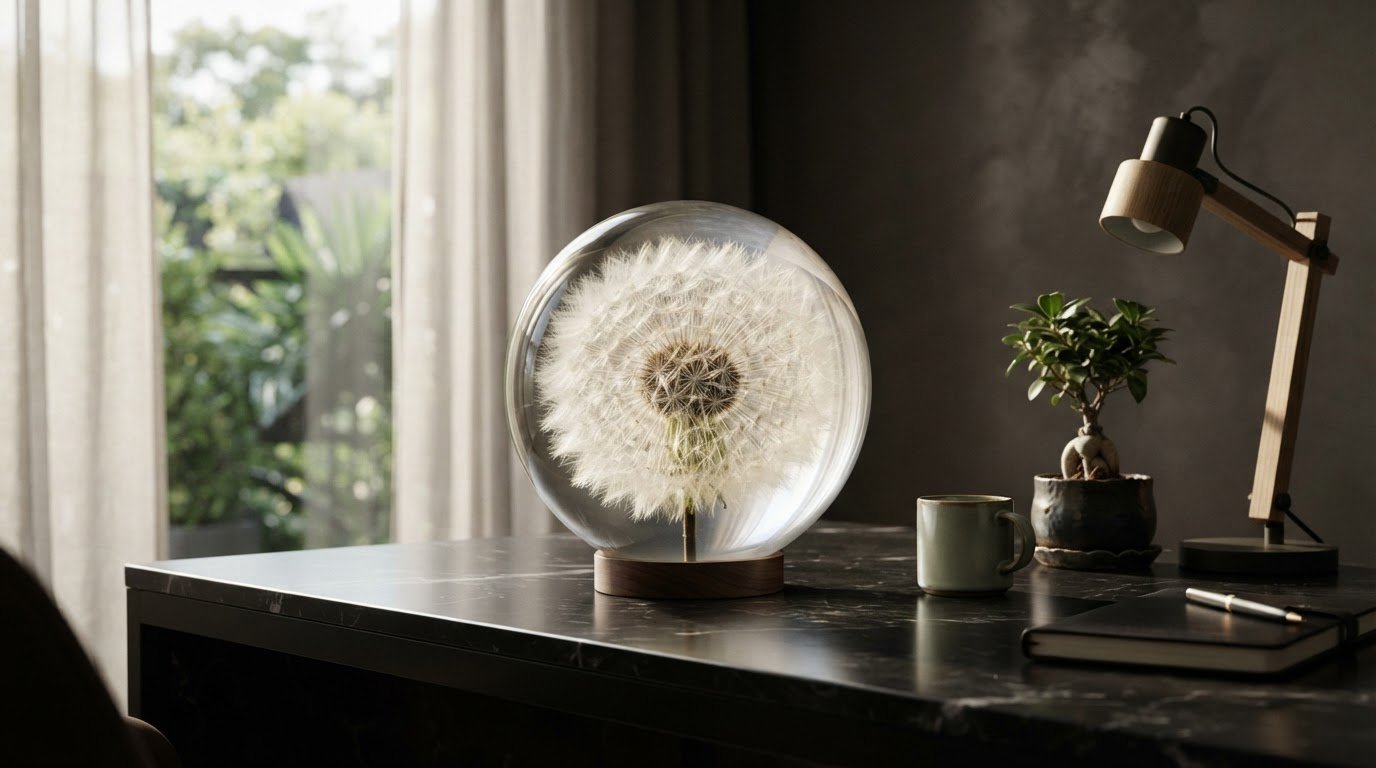
Creating a Nature-Inspired Office: A Thoughtful Guide to a Calmer Workspace
What if a calmer office began with taking something away, rather than adding more? Creating a nature-inspired office starts with noticing what the room already offers: where daylight falls, which colours catch your eye and what interrupts your attention. When a workspace feels sterile or visually busy, a few considered changes can bring a quieter connection to the natural world.
You don’t need to choose between a calm atmosphere and a space that supports focused work. Give each element a purpose, from a well-placed plant to a clear, organised desk. Natural details can soften a room without crowding it, and a meaningful botanical focal point can offer a quiet reminder to pause.
This guide takes you through the process, from assessing light and choosing a palette to comparing living plants with botanical art and natural textures. You’ll find practical ways to shape a workspace around your routine, with room for nature’s quiet artistry. A Dandelion Sphere, featuring a real dandelion preserved in resin, is one possible botanical detail, never a requirement.
Key Takeaways
Begin creating a nature-inspired office by noticing how daylight, movement, noise and daily tasks shape the room.
Use colour and tactile natural materials with restraint, choosing details that feel at ease in the space.
Compare plants, botanical artwork and natural textures by their upkeep, space needs and visual presence before choosing one or two.
Follow a simple sequence: observe, prioritise, arrange, introduce natural elements and refine what feels out of place.
Consider one meaningful botanical focal point, such as a Dandelion Sphere featuring a real preserved dandelion, to bring a quiet sense of coherence.
Table of Contents
Creating a Nature-Inspired Office Starts with Observing the Space
Use Light, Colour and Living Elements to Bring Nature into an Office
Choose Nature-Inspired Office Elements That Support Focus, Not Clutter
Create a Nature-Inspired Office in Five Considered Steps
Finish Your Nature-Inspired Office with a Meaningful Botanical Focal Point
Creating a Nature-Inspired Office Starts with Observing the Space
A workspace reveals itself over the course of a day. Notice it in the morning, when daylight first reaches the desk, and later, when shadows shift and your tasks change. Before rearranging anything, identify what already feels restful, what draws your eye away and where the room makes work less convenient.
A nature-inspired office is a workspace shaped by thoughtful contact with natural elements, in a way that honours both the room and the work done within it. This is the heart of Biophilic design: a considered relationship between people, place and the natural world. It needn’t begin with a purchase. Start by looking closely at the space you have.
Separate practical requirements from atmosphere. Write down the work the room must support, then list what that involves: storage, equipment, suitable seating and clear surfaces. A room used for writing may need an open desk; one used for calls may need a quieter corner. These practical needs help define the arrangement rather than getting in the way of it.
What should you notice before changing your office?
Observe where daylight falls and how it shifts through the day. Note views, reflections, noise and the routes you walk most often. Which surfaces feel crowded? Where does your eye naturally rest? List your regular tasks beside the equipment and clear space each one needs. This quick inventory helps separate what the room needs from details that simply catch your attention.
Which natural qualities matter most to your working day?
Choose the quality that would make the greatest difference: openness, quiet, softness, gentle colour or a view of nature. Your preference may depend on the work at hand. A visual thinker might welcome a leafy view, while someone who is easily distracted may prefer a calm, uncluttered outlook. There’s no single plant or palette every workspace needs. For a wider reflection on botanical accents and the feeling of nature within a room, explore the journal.
Keep the distinction between need and mood in view. A clear path may matter more than another decorative detail. A small touch of green may bring enough softness, or the room’s existing outlook may already provide it. As you consider creating a nature-inspired office, let observation guide each choice. The aim isn’t to make the room resemble the outdoors, but to find a connection that suits your working day.
Use Light, Colour and Living Elements to Bring Nature into an Office
Daylight changes a room by the hour. It crosses a desk, brightens a wall, then slips away. Let that movement guide the layout. Position your desk to make use of available light, while checking that sunlight doesn’t fall directly across a screen or create distracting glare. Where the room allows, keep windows and sightlines open. A clear view can make the space feel more open without taking up desk space.
How can daylight guide the layout?
Try your usual working position at different times of day. Notice when the light feels welcome and when it becomes uncomfortable. If you can’t move the desk, try adjusting its angle. Avoid placing tall objects where they block a window, and leave some visual breathing room around the view. The aim isn’t to control the light, but to work with the room’s changing character.
Let colour and texture echo the qualities you find restful outdoors. Muted greens, soft browns, warm neutrals and the variation of stone or wood can add depth without competing for attention. A linen surface, wooden tray or single natural texture may be enough. Daylight, natural textures and a restrained palette can bring a workspace together as one calm, coherent whole.
Should plants be part of a nature-inspired office?
They can be, but they don’t have to be. Before choosing a plant, consider the light it will receive, the space available and whether its care fits your routine. A small plant on a shelf can bring a living presence without taking up desk space; a larger one may suit an open corner. If the room is dim, crowded or not suited to plant care, botanical imagery and natural materials offer other ways to bring nature into the space.
Research into indoor plants offers one perspective on their place in shared environments. The research on the psychological benefits can be a useful starting point, whilst the right choice for your office still depends on its light, layout and daily rhythm. Treat plants as an option to consider, not a rule for creating a nature-inspired office.
If living greenery doesn’t suit your space, botanical art can offer a lasting presence without the care a plant requires. A Dandelion Sphere, featuring a real dandelion preserved in high-quality resin, is one possible focal point. Its delicate form offers a quiet connection to nature. You can explore botanical art objects if you’re considering this kind of detail. Let the room’s light and working needs remain your guide.
Choose Nature-Inspired Office Elements That Support Focus, Not Clutter
Nature needn’t arrive all at once. A leaf, the grain of wood or an open view can be enough to soften a working space. The best choice isn’t necessarily the one that makes the strongest impression. It’s the one that fits comfortably alongside the work. A nature-inspired office can still be organised, with equipment close at hand and useful surfaces left clear.
Plants, botanical art or natural materials: which suits your office?
Compare how much care, space and visual presence each option needs. Living plants change over time and need suitable conditions. Botanical artwork offers a focal point without taking up desk space if you place it elsewhere. Natural textures, such as wood or woven details, add a quieter sensory note. An open view may be all the room needs.
Element | Upkeep | Space and visual presence |
|---|---|---|
Living plant | Ongoing attention; consider whether its needs suit your routine. | Needs a suitable place, with presence that varies by size and form. |
Botanical artwork | No plant care; choose a placement that won’t interrupt work. | Can create a focal point beyond the desk’s working surface. |
Natural textures | Little additional attention. | Can be subtle, incorporated into items already in the room. |
Uncluttered view | No added upkeep. | Uses the outlook the room already offers, without occupying a surface. |
There’s no universal answer. If you enjoy tending to greenery and have a suitable place, a plant may feel welcome. If you prefer fewer visible objects, a natural texture or open view may be more restful. Botanical art can provide a gentle focal point. A Dandelion Sphere featuring a real dandelion is one option, not a necessary addition. For a quiet meditation on curating eternal stillness, the journal offers a related reflection on botanical art collecting.
How can you keep a nature-led workspace uncluttered?
Start with one element and live with it for a while. Does it bring ease, or compete with your work? Keep frequently used equipment within reach and protect the clear surfaces your tasks depend on. Use a simple test: keep an item only if it supports the room’s purpose or atmosphere. The positive effects of nature are explored by UC Berkeley’s Greater Good Science Center, but your own space still calls for thoughtful balance.
Creating a nature-inspired office isn’t about filling every quiet corner. It’s about choosing carefully, then leaving enough space for attention to settle.
Create a Nature-Inspired Office in Five Considered Steps
You don’t need to remake a room to change how it feels. Sometimes a small adjustment changes how the whole space meets the day. Start with the work itself. Begin with your routine, then let natural elements follow the room’s needs.
Observe. Notice the room’s light, layout, sounds and daily movement. Which view feels restful? Where do papers gather? Note your regular tasks and the surfaces or equipment they require. This pause gives you a picture of the space as it is, not as you imagine it ought to be.
Prioritise. Choose one quality to invite in. Perhaps you want a clearer desk, a softer palette, more openness or a small connection to greenery. Make the priority specific. “A quieter place to read” is easier to act on than a wish to make everything feel different.
Arrange. Settle practical essentials before adding anything new. Place frequently used equipment within reach, keep the surface needed for work clear and make sure the route through the room feels easy. Try moving an existing item before considering a replacement. Sometimes a little extra space is the most useful change.
Introduce natural elements. Choose one detail that supports your priority: a plant suited to the room, a natural texture, an open view or a botanical focal point. A Dandelion Sphere, featuring a real dandelion preserved in resin, is one possible nature-inspired detail. It isn’t essential; choose what feels at ease in your workspace.
Refine. Use the revised space through a normal working day. Notice whether the change suits your tasks and settles the room, or draws attention away. Remove or reposition anything that makes a useful surface harder to use or competes with your work. Keep the arrangement open to adjustment.
How can you refine the room without overfilling it?
Make one change at a time so you can tell what has helped. A plant might bring welcome life but take up space you need for notes; a natural material may offer a gentler presence. After working in the room, ask: does this support its purpose, its atmosphere, or both? If it doesn’t, try moving it or taking it out.
Creating a nature-inspired office is less about adding more than finding a fitting balance. If a botanical focal point feels right for your workspace, you can explore Dandelion Spheres and botanical art objects as one considered possibility. Then let the room breathe.
Finish Your Nature-Inspired Office with a Meaningful Botanical Focal Point
Once the practical choices are settled, the room may benefit from one final detail. Not a collection of objects, just a focal point that gathers the eye and gives the space a sense of coherence. It might be a branch gathered on a walk, a botanical image or an object that recalls a season you would like to remember.
Creating a nature-inspired office doesn’t depend on this finishing touch. Clear surfaces, useful storage and a comfortable place to work remain the foundations. A botanical focal point is a personal choice. Add one only if it brings meaning without turning the room into a display area.
What makes a botanical focal point feel personal?
Choose with feeling, not obligation. Perhaps a particular flower recalls a garden from childhood, or a seed head brings back the familiar wish made before its seeds drifted away. A Dandelion Sphere is a botanical art object featuring a real dandelion preserved in high-quality resin. Its delicate form holds a fleeting natural moment in stillness, offering a quiet reminder of nature’s detail.
Such an object doesn’t need a grand story. Sometimes its meaning is simply the pause it invites in an ordinary working day. The brand line, “A Fleeting Moment, Held Forever”, speaks to that meeting of time, nature and memory.
Where can a botanical art object sit in an office?
Look for a place where it can be seen without interrupting your work. A shelf, side table or clear corner may be a better position than the desk itself, especially if you need that surface for writing or equipment. Consider the view from your usual seat, how much space is available and whether the object will draw your attention away from tasks that need focus. The right place feels considered, not crowded.
If a Dandelion Sphere feels like a fitting detail for your workspace, you can explore the botanical art collection at your own pace. It’s one possibility among many, never a requirement for a thoughtful office.
Let one natural detail be enough: a quiet reminder to pause, then return to the work before you.
Let Nature Find Its Place in Your Workspace
A calmer office begins with attention. Notice how the light moves, what your work requires and where the room already feels at ease. Then choose natural details with care. A plant, a tactile surface or an open view may be enough. Keep practical needs first, and let each addition support the space rather than compete with it.
Creating a nature-inspired office isn’t about filling every corner. It’s a gradual practice of observing, choosing and refining until the space feels useful and quietly personal.
If a botanical focal point feels right, a Dandelion Sphere features a real dandelion preserved in resin. The brand line, “A Fleeting Moment, Held Forever”, reflects this meeting of nature and time. Explore the botanical art objects for a considered possibility for your workspace.
Begin with one small change and give it time to settle. Your workspace can become a place that feels more connected to the natural world, one thoughtful detail at a time.
Frequently Asked Questions
How do I create a nature-inspired office?
Begin by observing how the room feels and functions through a working day. Notice daylight, views, movement, noise and the tasks your space needs to support. Then choose one priority, such as a clearer desk or a softer palette. Arrange practical essentials first, and introduce a natural detail only if it suits the room. Creating a nature-inspired office is a gradual process of choosing and refining, not a reason to replace everything.
What makes an office feel connected to nature?
An office can feel connected to nature through daylight, a view outdoors, living plants, botanical imagery, natural colours or tactile materials such as wood. These elements needn’t appear together. A clear view and one gentle texture may be enough to suggest the changing world beyond the room. Choose what feels restful to you rather than following a fixed palette or assuming every workspace needs greenery.
Can a nature-inspired office still be practical for focused work?
Yes. Natural elements can sit alongside an organised workspace when practical needs come first. Keep frequently used equipment accessible and preserve clear surfaces for your daily tasks. Choose details that don’t obstruct a view, interrupt movement or compete for attention. A plant on a shelf, a natural texture or one botanical focal point can bring warmth without taking over the working area.
Which plants are suitable for an office with little daylight?
Some plants, including snake plants and ZZ plants, are often considered for lower-light rooms, but “low light” doesn’t mean no light. Check the conditions in your office and the care each plant needs before choosing one. If the room is especially dim, or plant care doesn’t suit your routine, don’t force a living element into the space. Botanical imagery or natural textures can offer another quiet connection to nature.
How can I make a small office feel more natural without clutter?
Keep the desk clear and make use of the room’s existing qualities first: daylight, an open sightline or a calming view. Add one small natural detail where it won’t obstruct equipment or work surfaces. A wooden object, botanical image or carefully placed plant may be enough. After a working day, consider whether the element makes the room feel busier or less practical. If it does, remove or reposition it.
Where should I place botanical art in an office?
Place botanical art where it can be seen without competing with your work. A shelf, side table or clear corner may suit better than a desk used for writing or equipment. Consider the view from your usual seat, the available surface and whether the artwork draws your attention at the wrong moment. A Dandelion Sphere features a real dandelion preserved in resin and may serve as one optional focal point, placed where it can offer a quiet pause.
Disclaimer
The content on this website is provided for inspiration and informational purposes only. Articles reflect the philosophy and storytelling of Dandelion Sphere and are not intended as professional advice. While every effort is made to ensure accuracy, no guarantees are given regarding completeness or current applicability.

shop dandelion sphere